AI Voices for Broadcasting & TV
Bring approved performances to more audiences without losing the voice, the craft, or the consent behind them.
Clients
Voice Technology for Broadcast and Television
Keep the original voice across languages
Fix ADR & continuity without another session
One voice across every format and window
Bring back heritage & legacy voices
For documentaries, revivals, finales, and commemorations, bring a familiar voice back with permission, care, and a clear line around its use.
Cases
How Respeecher Revived Manuel Rivera Morales’ Iconic Voice for the Olympic Games
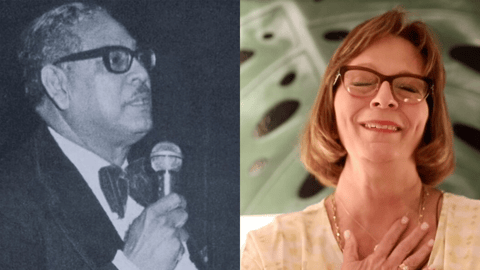
Respeecher and EBU Bring AI Voice Cloning to European Games 2023 Broadcasting
Why teams choose Respeecher
Built for real productions
It has to work after it leaves the demo: in a DAW, in the mix, under dialogue, beside the original performances, and during final review. Our work has been used on high-stakes productions including The Mandalorian, The Brutalist and Emilia Pérez.
Ethics and consent by design
Before there is a model, there is an explicit consent. Every Respeecher project runs on documented consent and a clear agreement that legal and talent-relations teams can actually read without reaching for a red pen.
Consent doesn't end at delivery
Nothing you send us becomes a public voice. We don't train public models on client audio, and we handle scripts, stems, and sessions as the sensitive IP they are.
People who know the craft
Our sound engineers, synthetic speech artists, and ML researchers work alongside real post-production constraints: performance, mix, approvals, and delivery. You get a voice output designed for professional use from the start.
Testimonials

What Respeecher is doing will open up possibilities for performers to play characters from anywhere in the world whilst also honoring the nations those characters are from.






Voice Demo
Opportunities for your production
Use speech-to-speech voice conversion to take approved actor and presenter voices into promos, recaps, and shoulder programming without turning every new version into another studio booking.
Every voice model we build starts with explicit consent from the talent or estate, plus a defined scope for how, where, and how long that voice can be used. No grey-area voice assets waiting to become someone else’s legal problem.
Release in more markets without losing the voice
Your episode can travel to new markets without leaving its original voice behind. Spanish, German, Portuguese, Arabic, and beyond — we’ll work with the languages that matter to your release.
Some voices carry whole eras with them. We work with estates and rights-holders to return them to documentaries, revivals, and commemorative broadcasts with the care, permissions, and limits the work deserves.
Complete 2026 guide on synthetic media

Awards
How we work
You share the recordings
- Send us your target voice recordings - existing audio, archival material, whatever you have.
- We evaluate the quality and advise on what's needed.
We get permission and sign a contract
- Before anything is cloned, we secure consent from the voice owner.
- Every voice is used with full permission - no exceptions.
You get the first results within 2 weeks
- We build the animated voice model and deliver the first conversions.
- You review and give feedback.
We deliver the final voices
- We process your feedback, refine the output, and deliver the final conversions -
- or provide direct access to the voice model.

Price
model
model
Blog

A Producer’s Checklist for Recording Clean AI Voice Training Data

The Engineering Decisions Behind a Good Voice Agent

AI Voice Consent: How to Get Actor Sign-Off Without Killing the Deal
FAQ
Yes. Off a single approved recording block, the same voice can carry many tailored versions across markets and segments, without booking a presenter back in for every variant.
For major broadcasters and studios, we support deployment where models run in controlled environments, so voices, scripts, and sessions stay within your infrastructure.
Speech-to-speech starts with a human performance, then converts it into the approved target voice. It keeps the timing, phrasing, and emotional intent that make a line belong in a scene — so it is the better fit when performance matters.
Text-to-speech starts with a script. It’s a good fit for content that follows a set format and needs to be produced at scale, from templated recaps and continuity announcements to informational segments and promo versions.
Glossary
AI voice for broadcasting
Consent-first voice technology for television and streaming production, used for ADR, language versions, narration, promos, and approved legacy voice projects.
Voice model
A trained representation of a specific voice, built from approved recordings of a commentator, athlete, or legacy figure.
Speech-to-speech
A workflow where a human performance (timing, emotion, phrasing) is recorded first, then converted into a target AI voice.
Text-to-speech
A workflow where written scripts are converted directly into synthesized speech, useful for scalable formats like templated recaps or informational messages.

.png?width=713&height=332&name=Frame%202472%20(1).png)