


AI Voices for
Game Development

Streamed on
Clients
Respeecher is trusted by industry leaders worldwide



















 Media
Media
Respeecher makes headlines around the world





















WE Support
GAME Studios
Voice Continuity
Keep characters consistent across sequels, downloadable content (DLC), and live-service updates, under clear consent with the actor or estate.
VO Scale
Build out NPC casts and side-character dialogue from the actors you already have under contract, with performance that holds up in the mix.
Nightly Build Iteration
Get new dialogue into the next nightly build when the narrative changes mid-production.
Voice De-aging
Preserve a young actor's voice from prototype through full production, so a kid character still sounds like a kid in the sequel.
Cases
Game Development
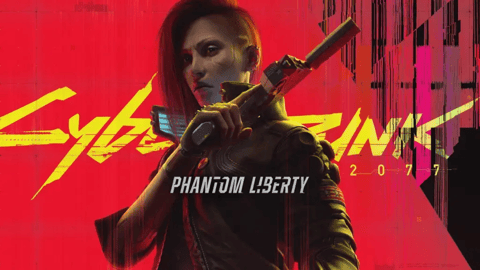
Cyberpunk 2077:
Phantom Liberty
Respeecher helped CD PROJEKT RED preserve the voice of Viktor Vektor for a DLC to "Cyberpunk 2077"

voice synthesis
Voice Marketplace: Revolutionizing Indie Games with AI Voice Synthesis Technology
Welcome to the world of indie gaming, where innovation, creativity,...

Why studios choose Respeecher
Built for real productions
Our voice work ships in AAA games and live‑service titles, where narrative changes, recasts, and tight build cycles cost real time and money.
Ethics and consent by design
Every project runs on explicit consent. Every voice we clone or generate is used with permission, under agreements your legal team can stand behind.
Security that matches the studio
Your scripts, recordings, and unreleased dialogue stay yours. We never train public models on your content, and our systems are built for studio‑level security.
People who know the craft
Respeecher is a team of sound engineers, synthetic speech artists, and ML researchers who work in DAWs and inside real production schedules.
Testimonials

The process was creatively fulfilling and wholly successful as a result of months of hard work and transparent communication between our performers, our mixers, and Respeecher’s excellent team of engineers— all the feedback from myself, our Hungarian team, and our sound department was taken into account, but more importantly the results exceeded our expectations—Respeecher helped us to perfect even the most nuanced elements of the Hungarian language; known to be one of the world's most difficult languages if one is not originally a native speaker. [...]
What Respeecher is doing will open up possibilities for performers to play characters from anywhere in the world whilst also honoring the nations those characters are from.
What Respeecher is doing will open up possibilities for performers to play characters from anywhere in the world whilst also honoring the nations those characters are from.

We were thrilled with the voice conversions from Respeecher. They kept us in the loop at every stage, refining the audio through multiple iterations and feedback rounds. Their dedication and problem-solving ensured we got results that both I and Robbie Williams himself were happy with.

I am delighted with the result—the songs sound exactly as I envisioned them, adding new shades and hues to the story. Respeecher's sound team has proven to be both diligent and professional when it comes to dealing with very subtle aspects like pitch and accent peculiarities. “Emilia Pérez” turned out great, and I am grateful to the Respeecher's engineers.


Respeecher also matched my voice to Scott’s professional reading of the Impromptu text. The end result is a nearly perfect audio artifact with amazing intonation. It sounds flawlessly human—though a bit less of a match to “my” voice than the Vall-E recording—and most importantly, similarly didn’t require multiple days of my time to record. If we hadn’t prioritized releasing an early version to show folks what that sounded like, the Respeecher team was confident that with more iterations we could have gotten it near-perfect.

We worked with Respeecher to recreate my voice in Ukrainian to as part of our education initiative ‘BecomingX Ukraine’. The technology is phenomenal and the result is astounding – I never thought I’d hear myself speaking fluent Ukrainian! Well done and thank to all the team for all your incredible work you are doing. We’re forever grateful and proud to partner with you.

We used Respeecher to de-age the voice of a well-known actor in one of our movies. We were nervous that it wouldn’t work very well since the actor is in her 80s and we needed to de-age her down to mid-forties. Even though there was such a huge age jump, the end result from Respeecher was amazing, and added a level of authenticity to our movie. Everyone from our director through our entire post team was excited to work with Respeecher. Hopefully we will be able to do so many more times in the future.

We worked with Respeecher on a film called ‘In Event of Moon Disaster’ first shown at the Amsterdam Documentary Film Festival 2019. They helped us create a synthetic voice of Richard Nixon to bring to life a never-read contingency speech in case the Apollo 11 mission went badly. We created a highly realistic film, in a large part due to their work. ‘In Event of Moon Disaster’ shows the creative possibility of voice replacement technology as well as highlighting just how realistic deepfake technologies can be, acting as a civic engagement project for the public along with contextual and educational resources.

For Veritone, the most important thing is ensuring our clients get access to technology without compromising on the ability to protect, the delivery speed and quality, and in this case, of the generated content. Respeecher's technology meets both requirements and has a proven track record of working with tier one projects.

When I approached the team at Respeecher with a very sensitive and personal documentary project, I didn't know what to expect. I’m happy to say that it has been an amazing experience. They are extremely professional, ethically minded and are genuinely passionate about bringing their innovative technology to the world. Their approach to the voice cloning process is highly personal and transparent. As a documentarian, it was important to me that the approach was ethical and human focused. The Team at Respeecher delivered on their promises and I could not be happier with the results.

Respeecher is a remarkable tool for Sound Editors. It delivers very high-fidelity recreations of a target voice, with transparent performance-matching of its source. It blows text-to-speech out of the water! The effect is uncanny and incredibly effective and I can imagine a whole slew of uses going forward. I am very excited to have discovered Respeecher, and it will be my go-to for voice recreation in the future, without question.


Respeecher's source/target conversion of Mr. York's speaking voice demonstrably opens doors for the entertainment, education, and healthcare fields. Suffice it to say, it was an absolute honor to collaborate with them. Their brilliant accomplishment and timely delivery have allowed our humble project to be a success, exceeding our expectations for what's even possible.

I am very grateful to Respeecher for giving my words and work a whole new lease on life. The technique involved is as ingenious as it is amazing, and promises a great future for all those involved in voice work. With Respeecher, the quality of the re-worked passages is indistinguishable from the original. History comes almost miraculously alive again. I heartily endorse this product.

Discovering Respeecher was the highlight of our project. They agreed to work with the task even when our training data was not of the best quality. The result was fantastic, and the level of detail was just outstanding.

Working with Reespecher was a unique experience. Their attentiveness to detail and dedication to this project allowed us to reconnect with one of our lost narration idols in Puerto Rico 'Manuel Rivera Morales' on a new level. It gave his family and PR a glimpse of what could have been if he was still alive and narrating all sorts of Olympic sports games. It was truly magical to see this project come alive.

Working with Respeecher has been incredible. Their team was meticulous and patient, walking us through the process of developing an accurate model... and the final result was nothing short of miraculous. It really sounds like we’re hearing our (deceased) subject speaking again. Something I never would have thought was possible.

From the introduction to Respeecher’s innovative and state-of-the-art products to the thorough and quick technical support, I immediately felt that I found the perfect partner and technology for my projects’ needs. During our discussions, the team offered other creative options that assured me we were on the same page and had my project’s success as a top priority. The Respeecher team members are consummate professionals.

Making a film which was so sensitive we needed a company who understood the sensibilities and ethical issues we were dealing with. From the first meeting with them, Respeecher acted with respect and professionalism, delivered what we wanted brilliantly, efficiently and to spec.

When Legion Creative took on the challenge of bringing MTV’s Kurt Loder back to his mid ’90s glory for the Showtime original Yellowjackets, we needed a resource to bring his voice in line with his de-aged visual appearance. Respeecher worked quickly, with clear communication and helped us achieve the time-warping magic we were looking for.

Using the Respeecher technology as a powerful filter for our recorded dialogue allowed us to quickly solve a voice-over challenge that could have completely derailed our production timeline and set us back several months. Their easy-to-use online web interface allowed us to resolve our problem in a matter of weeks and with very minimal impact on our overall schedule. Their friendly staff were extremely responsive to our feedback and provided excellent guidance on the use of the amazing technology.

Respeecher brought the voice of WILT CHAMBERLAIN sonically back to life allowing Wilt to posthumously narrate his own documentary series GOLIATH [Showtime & Paramount+]. Our experience working with their team was a pleasure from start to finish. They embraced the creative challenge of building a practically perfect replication of Wilt's voice from hours of archival to carefully match the narration led by our voiceover actor's performance of Wilt's own words selected from his books. Their technicians paid fastidious attention to detail and contineud to work with our directors feedback to adjust the nuance of Wilt's voice until it was seemingly flawless. The Estate of Wilt Chamberlain authorized our team to create a 3-hour series documenting his extraordinary life; so naturally it was a huge relief when we shared the final WILT converted VO narration and received a unanimous approval from his family. Thank you again to Respeecher! Your professionalism, commitment to detail and excellence surpassed our expectations. Your nuanced work brought Wilt's voice back to life will be cherished in GOLIATH eternally.

Working with Respeecher has provided me to control of where my voice is used, the opportunity to provide consent to my voice being used and receveing compensation.
VOICE DEMO

Complete 2026 guide on on synthetic media
This guide shows how to bring synthetic voices into your workflow without stepping outside ethics, consent, or 2026 local regulations.

Awards




Build your amazing product
We'll give it a voice
Price
model
model

.png?width=713&height=332&name=Frame%202472%20(1).png)
Blog
Sep 3, 2026, 5:26:24 AM
A Producer’s Checklist for Recording Clean AI Voice Training Data
An AI voice model can only be as good as the audio it learns from. Give it a clean,...
Aug 27, 2026, 6:17:16 AM
The Engineering Decisions Behind a Good Voice Agent
A voice agent can have a capable model and a good voice, yet still frustrate people....
Aug 13, 2026, 9:38:14 AM
AI Voice Consent: How to Get Actor Sign-Off Without Killing the Deal
The production survived weather, schedules, and three rewrites, and then you introduce AI...
